
Mackerel 2026: timing matters
Publisert den 07.04.2026 av Per Arne Fagervoll Meek
MARKET NOTE
The mackerel market has already reacted to lower quotas. Current activity points to a pause in buying rather than an improvement in supply.
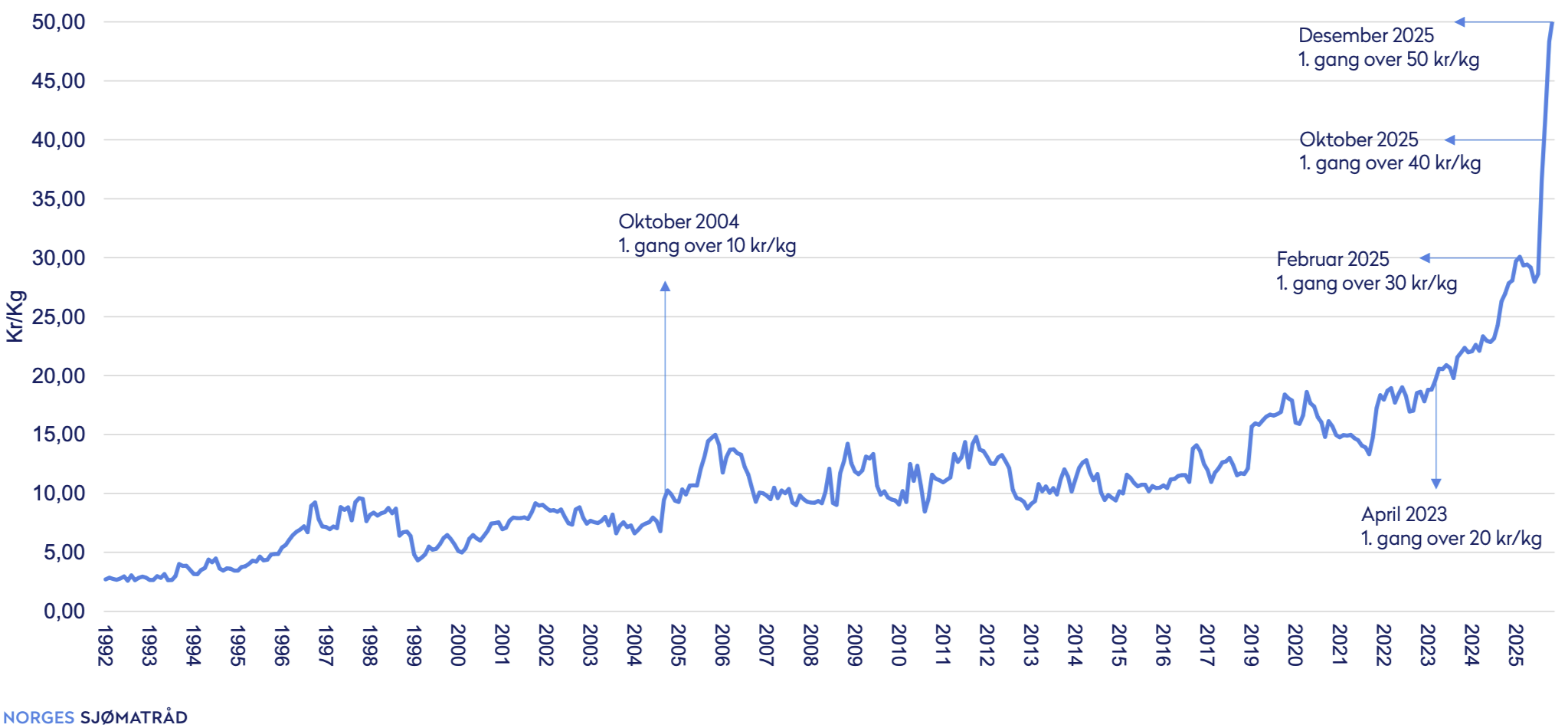
Through 2025, the market moved well ahead of the physical tightening that is now becoming more visible. As expectations of reduced 2026 quotas became clearer, prices rose sharply and buying activity accelerated. In the current market, timing is starting to matter more.
The market already priced in part of the tightening
Scarcity has not come as surprise in the current market. A substantial part of the expected tightening was already reflected in pricing during 2025. That was especially visible when key buyers moved earlier and more aggressively than normal in order to secure product. The result was a strong upward repricing that happened before the full reduction in physical supply had even been felt.
Since then, prices have been flatter. In our view, that is better understood as a period of consolidation than a sign that the market has become comfortable. Buyers have had to absorb a significant cost increase, and some hesitation is therefore natural. But a flatter market after a strong move should not automatically be read as a softer market underneath.
Supply remains clearly lower
While buying behaviour has slowed, the supply side tells a different story. Winter mackerel landings have been materially lower than last year, with around 9,000 tonnes reported so far versus 39,000 tonnes at the same point last winter. This is a meaningful reduction and reflects both lower quotas and lower winter fishing activity.
Our own experience at Global Fish points in the same direction. Available volumes are substantially lower than last winter, broadly around one third of the level we had at the same time a year ago. That does not in itself guarantee immediate price movement, but it does reinforce the underlying point that actual availability is tighter than current buying patterns may suggest.
This matters because markets often feel most balanced precisely when buyers are between inventory cycles. If stocks are still being worked through, day-to-day activity can look calm even as the physical supply picture tightens in the background.
A pause in activity, not a change in direction
The current tone of the market is therefore better described as cautious than weak. Buyers remain disciplined, but the structural conditions behind the market have not loosened. Lower quotas, reduced winter supply and uneven stock positions all suggest that the market remains tighter underneath than headline activity alone would indicate.
From a practical buying perspective, this creates a situation where timing becomes more important. A quiet market can easily give the impression that there is little urgency. But if supply is already reduced, the picture can change quickly once buying interest returns more broadly.
Freight adds another layer of uncertainty
Recent geopolitical tension involving the US and Iran has contributed to new uncertainty in freight markets, and several carriers have introduced Emergency Bunker Surcharges for container shipments. For reefer cargo, this does not change the underlying raw material story, but it does add another potential source of cost pressure into an already challenging environment.
For importers and distributors, that means uncertainty is no longer only about fish. Logistics may also become a more important part of the pricing equation through 2026, especially when total landed cost is under pressure.
Our view
Our view is that the market has already adjusted once to lower supply expectations, but not yet fully to the physical reality of lower volumes. The current slowdown reflects a market digesting earlier price increases and working through inventory, rather than a market that has become well supplied again.