Pelagic Industry Is Becoming More Interconnected
Publisert den 11.06.2026 av Per Arne Fagervoll Meek
The pelagic industry is increasingly influenced by a combination of biological developments, market expectations, logistics, currency movements and changing consumer behaviour. Understanding the interaction between these factors may become one of the most important competitive advantages in the years ahead.
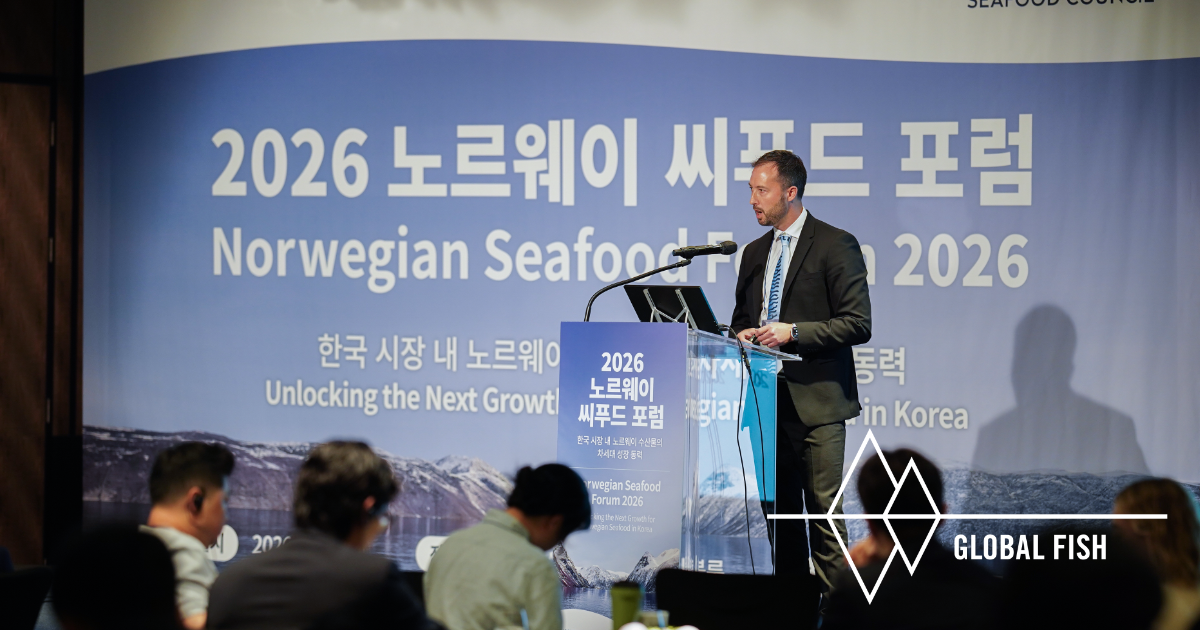
At the recent Norwegian Seafood Council Pelagic Seminar in Seoul, industry participants gathered under the theme Unlocking the Next Growth for Norwegian Seafood in Korea.
While the presentations covered a broad range of topics, one common observation emerged throughout the day:
Key takeaway: The future of seafood markets will be shaped by far more than quotas alone.
Markets react long before final quotas
Historically, markets seems to often having waited for final quota decisions before adjusting expectations. Today, the process starts much earlier.
Research voyages, stock assessments and preliminary scientific findings increasingly influence market behaviour well before formal quota decisions are made. Buyers, processors and exporters continuously assess available information and adjust purchasing decisions accordingly.
In many cases, market expectations begin influencing prices months before final quota regulations are published. This development has become increasingly visible within the North East Atlantic mackerel market.
Important nuance: Markets increasingly react before equilibrium is established. Expectations, inventory behaviour and purchasing decisions often move ahead of formal quota announcements, making timing more important than ever.
Resource availability is only one part of the equation
The discussion surrounding mackerel quotas has naturally received considerable attention over the past year. However, resource availability alone does not determine market outcomes.
Logistics, inventory levels, purchasing behaviour, currency movements and geopolitical developments all influence how markets ultimately react.
The prolonged disruption of traditional shipping routes following the Red Sea crisis demonstrated how quickly freight costs, transit times and planning assumptions can change. At the same time, significant currency movements have materially altered seafood purchasing power across several key markets.
These factors increasingly interact with biological developments rather than operating independently from them. What happens in the Norwegian Sea, the Pacific, global freight markets or currency markets increasingly influences decision-making throughout the seafood value chain.
Pelagic infrastructure requires long-term perspective
The Norwegian pelagic industry has invested heavily over decades.
Modern vessels, advanced freezing technology, processing facilities, cold storage infrastructure and specialised logistics systems have been built to deliver quality, consistency and efficiency.
Many Norwegian pelagic plants are capable of handling substantial daily volumes during peak seasons. This infrastructure represents significant investments in both capital and competence.
As quotas become more volatile, maintaining utilisation across the entire value chain becomes increasingly important.
Industrial perspective: This is not solely a fisheries discussion. It is also a discussion about maintaining industrial competitiveness, competence and long-term investment capacity.
Norway's pelagic industry has continuously invested to improve product quality, freshness, freezing technology, food safety and operational efficiency. These investments have enabled Norwegian pelagic seafood to establish a strong position in international markets, but they also require long-term predictability and sufficient volumes to remain sustainable.
The consumer is changing too
Several presentations during the seminar highlighted another important development. Consumer behaviour continues to evolve rapidly.
Convenience, ease of preparation, product consistency and clear value propositions are becoming increasingly important across many seafood categories.
This creates opportunities for innovation. New product formats, improved convenience solutions and stronger alignment with modern consumption habits may become increasingly important as the industry navigates tighter supply conditions and rising costs.
Value creation: The objective is not simply to sell more seafood. The objective is to create more value from every kilogram available.
AI may change how consumers discover seafood
Another topic receiving increasing attention is how consumers discover products.
For years, companies have focused heavily on SEO. Today, AI-powered search, recommendation engines and generative platforms are beginning to influence how consumers gather information and make purchasing decisions.
The implications for seafood are potentially significant. Businesses that understand how products are presented, recommended and discussed within AI-driven environments may gain advantages that extend well beyond traditional digital marketing.
The industry has always adapted to changing consumer behaviour. The next phase of adaptation may increasingly involve understanding how technology influences those behaviours.
Combined with innovation in product development, packaging, convenience and communication, this may help unlock new growth opportunities even in a period characterised by tighter supply and rising costs.
Looking ahead
The pelagic industry has always operated in a dynamic environment.
What appears different today is the growing interconnectedness between biological developments, market expectations, logistics, geopolitics, currency movements and consumer trends.
Success will increasingly depend on understanding how these factors influence one another. The companies and value chains that adapt successfully to this reality are likely to be best positioned for the next phase of growth.
The North East Atlantic mackerel category enjoys a unique position in many international markets. That position was not built in a season. It was developed through decades of cooperation, investment, competence and trust throughout the value chain.
Remember: The future of pelagic seafood will not be determined by a single variable. It will be shaped by how effectively the industry navigates all of them.