The Road to the 2026 Atlantic Mackerel Season - Part 2
Publisert den 27.07.2026 av Per Arne Fagervoll Meek
Halfway Through the Ecosystem Survey
The Road to the 2026 Atlantic Mackerel Season - Part 2 While the Norwegian pelagic industry prepares for the coming season and international markets position themselves for future supply, scientists are still working to answer one of the season's most important questions: where are the mackerel distributed across the Norwegian Sea, and what will this year's ecosystem survey reveal?
Earlier this month, we published The Road to the 2026 Atlantic Mackerel Season , outlining how the season develops from summer ecosystem surveys through commercial fishing and eventually to scientific advice and international quota negotiations.
More recently, we highlighted another important part of the wider mackerel story when South Korean government representatives visited Norway. The visit reflected the strategic importance of stable Norwegian supply to one of the world's largest and most important markets for Atlantic mackerel.
The international ecosystem survey in the Norwegian Sea has now reached its halfway point. Although it remains too early to draw conclusions about total stock abundance, the first observations provide useful insight into the distribution and size of mackerel recorded during the Norwegian part of the survey.
Where are we in the 2026 season?
The roadmap presented in the first article illustrated how the mackerel season develops through a series of connected scientific, commercial and regulatory milestones.
The ecosystem survey represents the first major stage in this process. The survey is now well underway, while the first commercial catches and the main Norwegian fishing season still lie ahead.
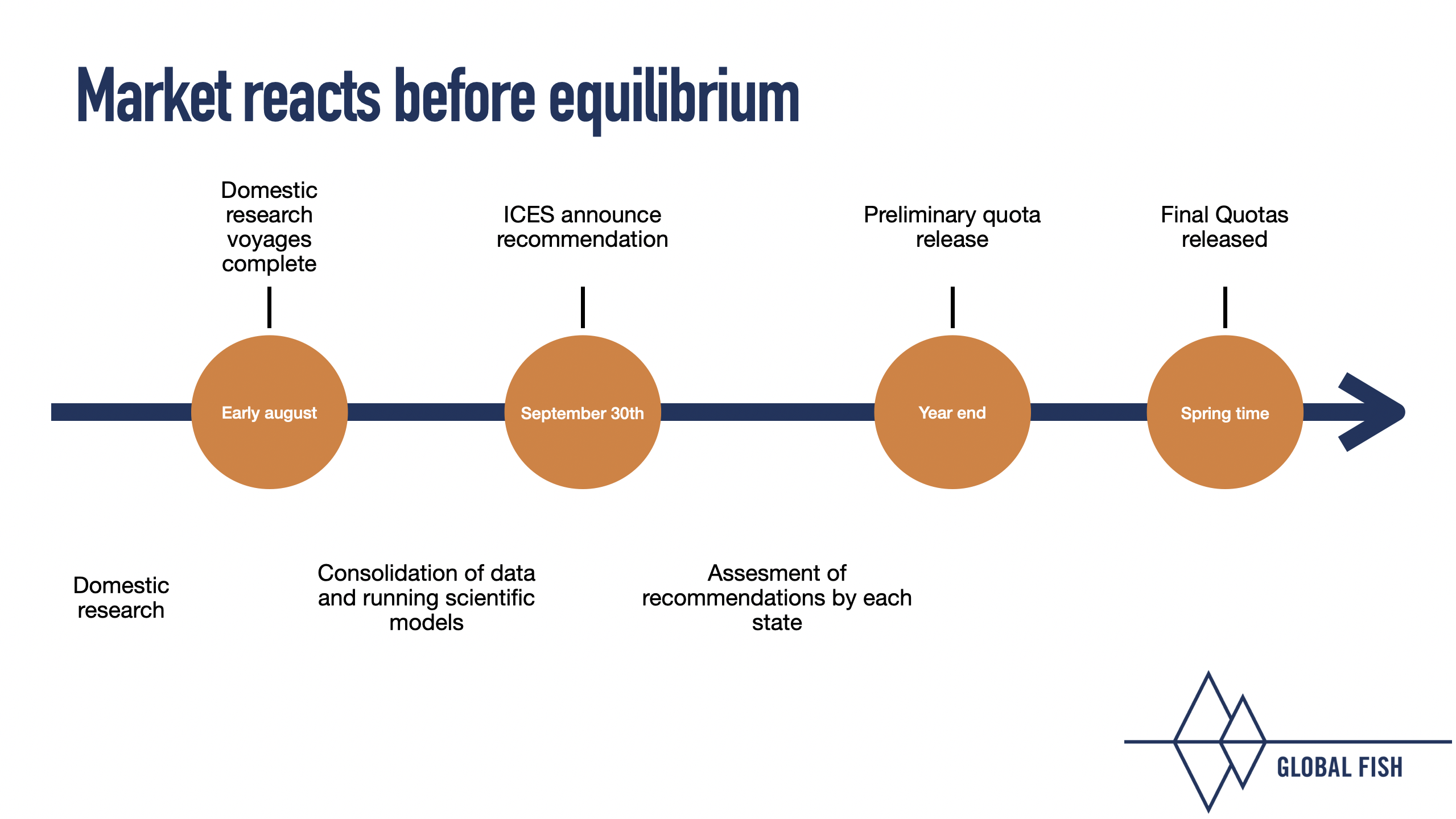
Figure 1. The 2026 Atlantic mackerel season develops through a sequence of scientific, commercial and regulatory milestones. With the international ecosystem survey now reaching its halfway point, the first major stage is well underway.
Science before the fishery
Each summer, research vessels from Norway, Iceland, the Faroe Islands and Denmark work together to survey the Norwegian Sea and map the distribution of pelagic fish stocks.
Scientists use echo sounders, pelagic trawl sampling and biological measurements to collect information about species composition, fish size, age, condition and environmental conditions.
When the participating countries have completed their respective survey areas, the observations are combined to provide a broader picture of the ecosystem and the distribution of key pelagic species.
The results later form part of the scientific foundation used in the assessment of the Northeast Atlantic mackerel stock.
What has been observed so far?
Preliminary observations from the Norwegian part of the survey show mackerel across a broad section of the Norwegian Sea.
The largest trawl catches were recorded in the central part of the surveyed area, particularly between 0 and 5 degrees east.
The size distribution also shows a clear geographical pattern. The largest individual mackerel were generally recorded further north, with fish above 500 grams observed north of 65 degrees north.
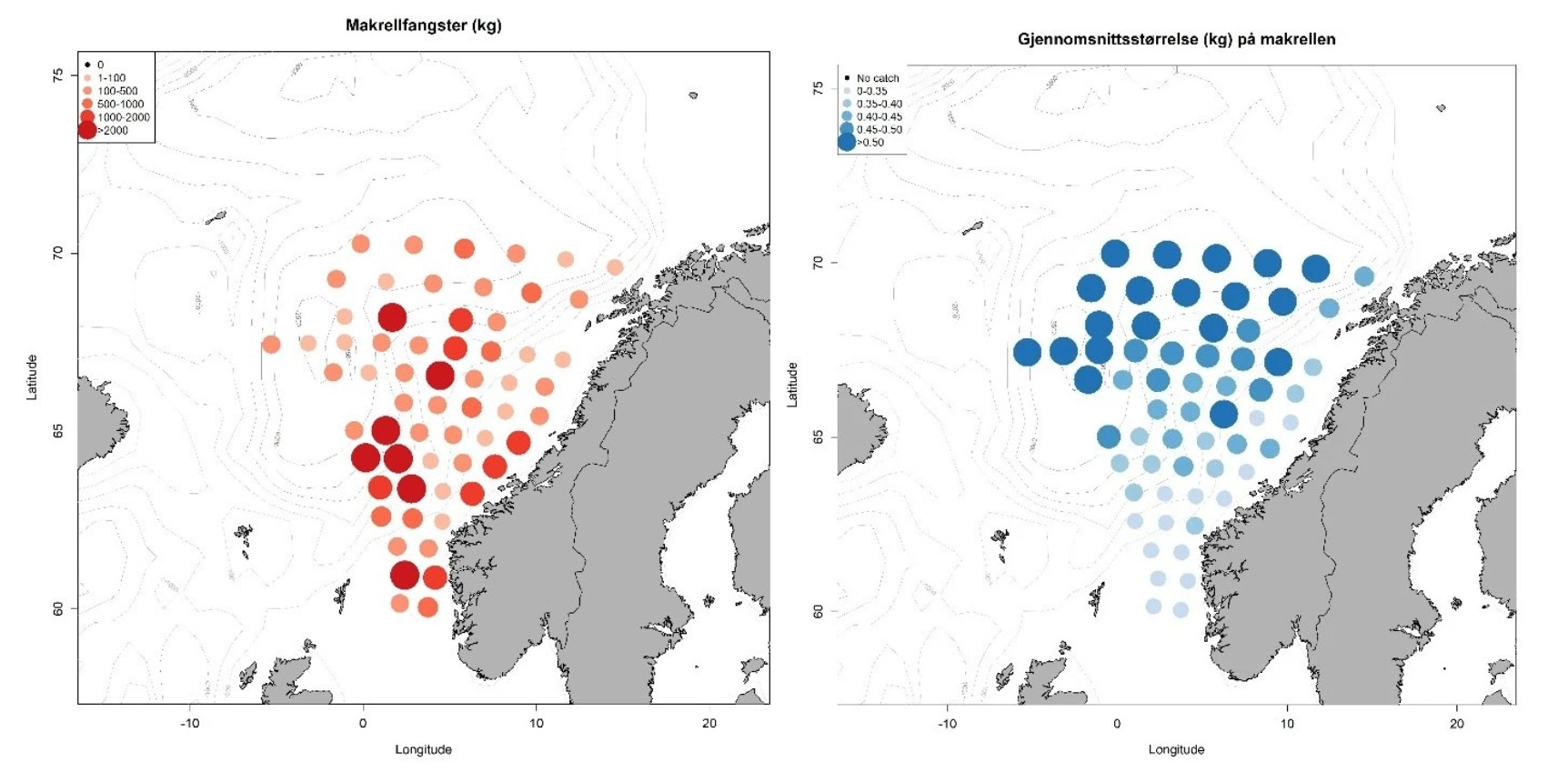
Figure 2. Preliminary observations from the Norwegian part of the 2026 ecosystem survey. The left map shows relative mackerel volumes at individual survey positions, while the right map shows average fish size. Larger individuals were generally recorded further north west. Source: Hector Peña/Havforskningsinstituttet
No conclusion on stock abundance yet
It is important to distinguish between the distribution shown in the preliminary maps and an estimate of the total mackerel stock.
The observations describe where mackerel were recorded during the Norwegian part of the survey and the relative catches made at individual sampling stations. They do not provide a preliminary estimate of total stock abundance.
The survey is an international programme covering a much larger area of the Norwegian Sea. A complete analysis can only be carried out after the participating countries have finished their work and the observations have been combined.
It is therefore too early to conclude whether the total amount of mackerel is higher or lower than in previous years, or what the survey may ultimately mean for the future scientific assessment of the stock.
Why the observations matter
For the fishing fleet, processors, exporters and international buyers, the survey represents the first major milestone in the seasonal timeline.
It provides an early picture of how mackerel are distributed before the commercial fishing season intensifies. The observation that larger fish have so far been found further north may also be relevant as the fleet begins searching for suitable fishing areas.
However, scientific survey catches and commercial fishing are different activities. The practical picture of the season will only become clearer when the fleet begins reporting catches, fish size, quality and availability from the fishing grounds.
From research vessels to commercial catches
Over the coming weeks, attention will gradually shift from research vessels to the commercial fleet.
The first Norwegian landings will provide the industry's initial practical observations of fish size, quality and availability. These experiences will complement the scientific work currently taking place across the Norwegian Sea and begin to shape the first real picture of the 2026 Norwegian mackerel season.
FOLLOWING THE 2026 SEASON
This is the second article in Global Fish's series following the road to the 2026 Atlantic mackerel season.
The next article will follow the first Norwegian commercial landings and examine how fish size, quality and availability develop as scientific observations meet commercial reality.
Source: Havforskningsinstituttet